How to Choose the Right Electrical Cable for Residential, Commercial & Industrial Applications
Learn how to select safe, reliable and certified electrical cables for different project requirements.
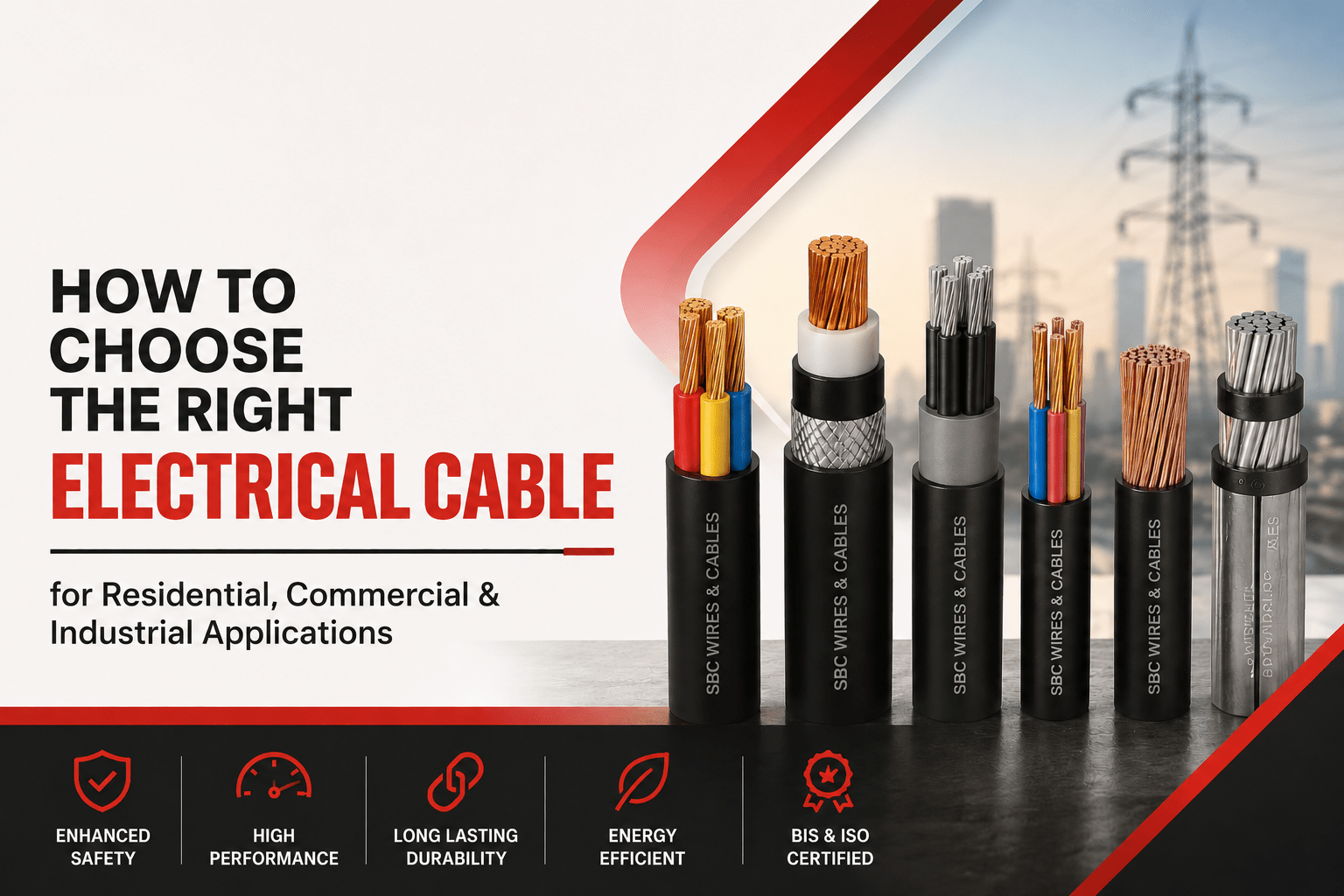
Electricity powers every modern building, industry and infrastructure project. Whether you are wiring a home, setting up a commercial facility or managing a large industrial plant, selecting the right electrical cable is essential for safety, performance and long-term reliability.
Using the wrong cable can lead to overheating, power loss, equipment failure and electrical hazards. That is why it is important to understand cable type, conductor material, insulation, voltage rating and application before making a selection.
Why Choosing the Right Electrical Cable Matters
Electrical cables are the backbone of any electrical system. They safely transmit power from the source to appliances, machines and equipment. A good quality cable helps improve electrical safety, reduce energy loss, increase durability and lower maintenance issues.
- Improves electrical safety
- Reduces risk of short circuits
- Supports efficient power transmission
- Provides longer service life
- Ensures better performance under load
Key Factors to Consider Before Selecting Electrical Cables
1. Application Type
The first step is to identify where the cable will be used. Residential, commercial and industrial applications have different requirements.
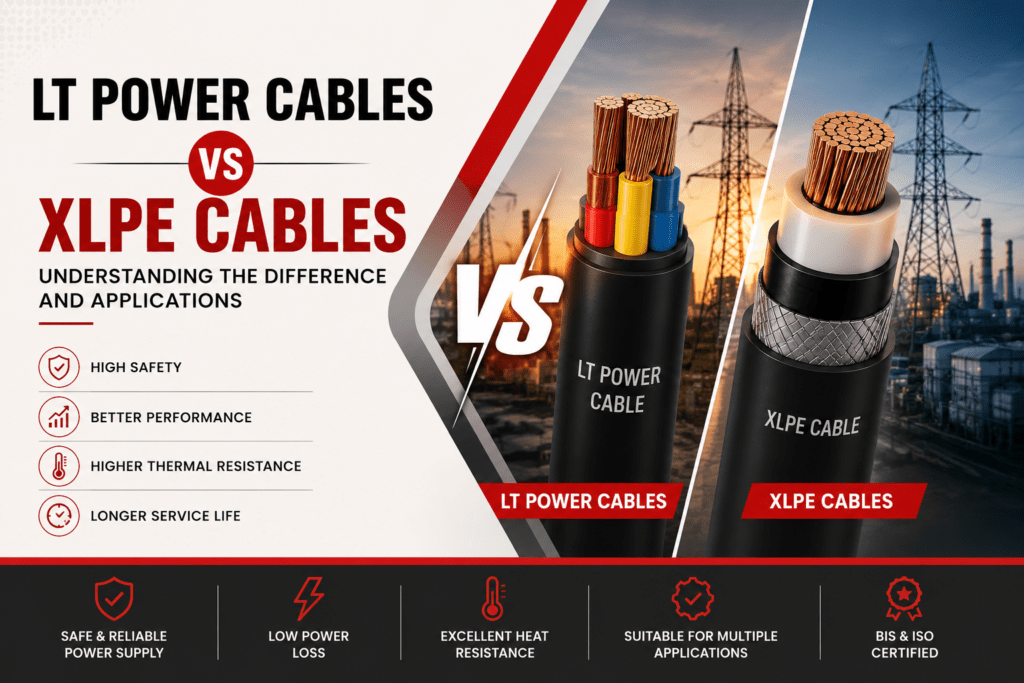
Residential wiring usually requires flexible house wires and PVC insulated cables for lights, fans, sockets and home appliances. Commercial projects need power cables, control cables and fire-resistant options for offices, malls, hospitals and hotels. Industrial applications require heavy-duty cables such as XLPE cables, rubber cables, LT power cables and instrumentation cables.
2. Voltage Rating
Every cable is designed for a specific voltage range. Choosing a cable with the wrong voltage rating may cause insulation failure or breakdown. Always select a cable that matches or exceeds your electrical system requirement.
3. Current Carrying Capacity
Current carrying capacity means how much electrical current a cable can safely carry without overheating. Cable size, conductor material, insulation type and installation method all affect current capacity.
Undersized cables can heat up and become unsafe. For high-load applications, cable sizing should always be done carefully.
4. Conductor Material
Copper and aluminium are the most common conductor materials. Copper offers high conductivity, flexibility and long life. It is commonly used in residential, commercial and industrial wiring. Aluminium is lightweight and cost-effective, making it suitable for power distribution and aerial bunched cables.
5. Insulation Type
Insulation protects the conductor and improves cable performance. PVC insulation is widely used for house wiring and general applications. XLPE insulation offers better thermal resistance, electrical properties and mechanical strength. Rubber insulation is suitable for flexible, heavy-duty and harsh environment applications.
Choosing Cables for Residential Applications
Homes require safe, flexible and durable cables. Multi-strand house wires are commonly used for lighting, fans, sockets and appliances. These wires are easy to install and provide reliable conductivity.
For residential use, always choose ISI marked wires and avoid low-quality cables because poor wiring can increase electrical risks.
Choosing Cables for Commercial Applications
Commercial buildings have higher electrical loads than homes. Offices, hospitals, hotels and malls require cables that can handle continuous usage and provide safe power distribution.
LT power cables, control cables and fire-resistant cables are commonly used in commercial projects. These cables support efficient power supply and improved safety in large buildings.
Choosing Cables for Industrial Applications
Industrial environments require strong, reliable and high-performance cables. Factories, power plants, automation systems and machinery need cables that can withstand heat, load, movement and demanding working conditions.
XLPE insulated power cables are ideal for industrial power distribution. Instrumentation cables are used for signal transmission and control systems. Rubber cables are preferred where flexibility, abrasion resistance and durability are required.
Importance of BIS and ISO Certified Cables
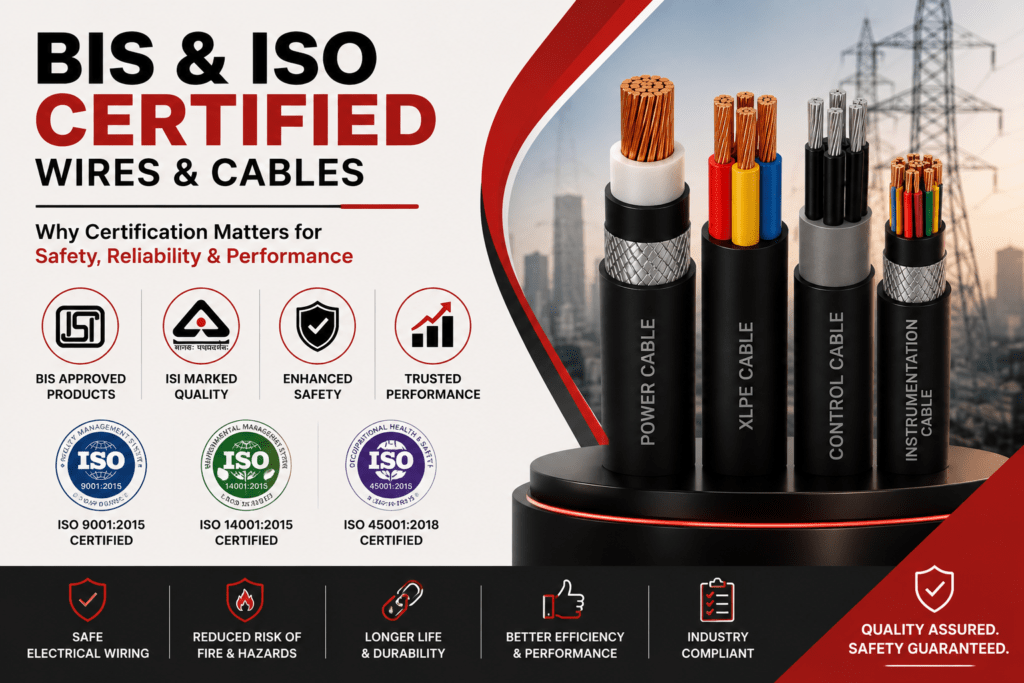
Certifications are an important sign of product quality and safety. BIS certified cables are manufactured as per Indian standards, while ISO certifications show that the manufacturer follows defined quality and management systems.
While selecting cables, look for standards such as IS 694, IS 1554, IS 7098 and IS 14255. These standards help ensure that the cable is suitable for its intended application.
Common Mistakes to Avoid
- Choosing cables only based on low price
- Ignoring load and voltage requirements
- Using non-certified products
- Selecting the wrong insulation type
- Ignoring environmental conditions
Why Choose a Trusted Cable Manufacturer?
A trusted wire and cable manufacturer provides consistent quality, certified products, tested raw materials and reliable technical support. This helps ensure long-term safety, durability and performance for every project.
At Shree Bhagwati Cables, we manufacture a wide range of SBC and TORREX brand wires and cables for residential, commercial, industrial and infrastructure applications.
Conclusion
Choosing the right electrical cable is essential for safe and efficient electrical performance. Factors such as application, voltage rating, current capacity, conductor material, insulation type and certifications should be carefully considered before selection.
Whether you need house wires, LT power cables, XLPE cables, rubber cables, instrumentation cables or aerial bunched cables, selecting certified and high-quality products ensures better safety, reliability and long-term value.
Need Help Choosing the Right Cable?
Contact Shree Bhagwati Cables for quality wires and cables for your project.
Get In Touch